Quality Development, Not Quality Import: Building Capability from Within
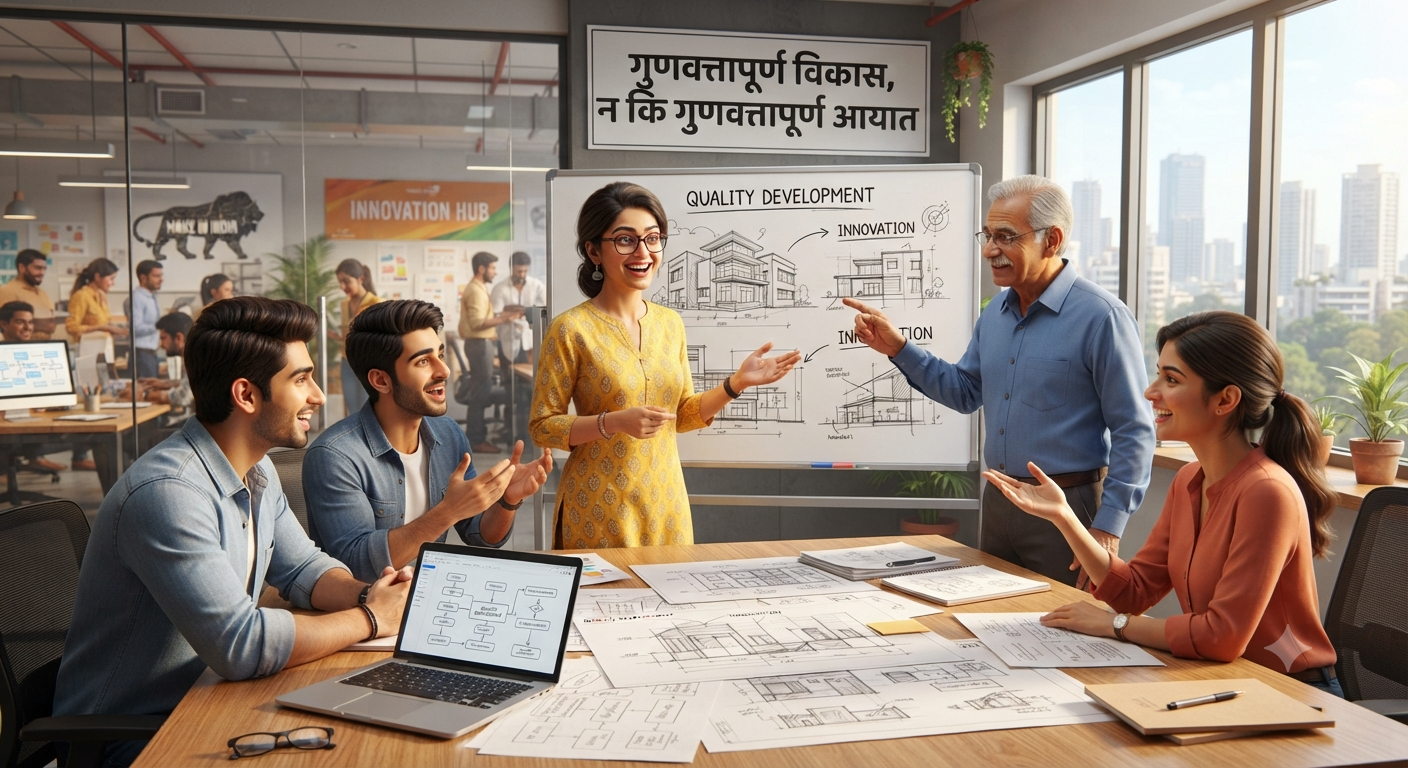
A strong nation is not built simply by importing the best products available in the world. It is built by developing the knowledge, skills, institutions, infrastructure and industries capable of creating high-quality solutions from within the country.
Imports are an important part of a modern economy. No country needs to produce everything by itself, and international trade can provide access to technologies, materials and products that may not yet be available domestically.
The larger question, however, is whether imports are helping us build stronger domestic capabilities or gradually replacing the need to develop them.
Quality development should therefore become a long-term national priority.
A country that wants to become economically strong must invest in its people first.
Students need access to quality education, laboratories, technology and practical learning. Universities need stronger research environments. Skilled workers need opportunities to develop advanced technical capabilities. Entrepreneurs need access to finance, mentorship and markets. Businesses need infrastructure that allows them to innovate and compete.
Development begins when these different parts of society start working together.
One of the most important areas is manufacturing.
A nation should not only be a large consumer market. It should also develop the ability to design, manufacture, test and improve products that can compete globally.
This requires investment in engineering, research, industrial infrastructure, supply chains, quality control and skilled labour.
The objective should not be to reject imported products.
Instead, imports can provide knowledge about global standards and expose domestic industries to international competition. The opportunity is to learn from the best products in the world and gradually develop the capability to produce equally good or better alternatives.
Research and innovation are central to this process.
Universities, research institutions and industries should have stronger connections so that ideas developed through research can become useful products and services.
A student working on a new technology should have a path from classroom to laboratory, from laboratory to prototype, and from prototype to a real-world application.
Innovation should not remain limited to academic papers.
It should have the opportunity to become products, businesses, industries and solutions for society.
Quality also matters.
Domestic development should never mean accepting lower standards simply because something is locally produced.
The goal should be the opposite.
Products and services developed within the country should be reliable, safe, efficient, affordable and capable of competing with international standards.
Quality should become a culture rather than a marketing statement.
This principle applies beyond manufacturing.
Healthcare, education, software, agriculture, transportation, construction, energy, defence technology, financial services and public infrastructure all require continuous improvement in quality.
A nation develops when its institutions learn to solve problems better over time.
Another important element is local talent.
Many young people have the ability to become engineers, researchers, designers, entrepreneurs, technicians and innovators, but they need the right environment to develop those capabilities.
Talent should not be measured only by examination scores.
Practical skills, creativity, problem-solving ability, technical knowledge and the willingness to experiment are equally important.
Skill development therefore becomes a foundation of national development.
The connection between education and industry must become stronger.
Students should have opportunities to work on real problems. Businesses should work with educational institutions. Skilled professionals should have pathways to continuously improve their knowledge.
When education, industry and research operate together, a country can develop capabilities that remain valuable for generations.
Small businesses and local entrepreneurs also have an important role.
National development does not depend only on large corporations. Thousands of small manufacturers, technology companies, workshops, service providers, farmers, entrepreneurs and skilled professionals contribute to the economic strength of communities.
Helping these businesses improve technology, productivity, quality and access to markets can create a much broader foundation for economic development.
The objective should be to move from dependence to capability.
From importing solutions to developing solutions.
From consuming technology to creating technology.
From buying products to designing and manufacturing products.
From searching for jobs to creating opportunities.
This does not mean closing the country to the global economy.
A confident nation can participate in international trade while continuously strengthening its own capabilities.
We should learn from global innovation, collaborate with international institutions and businesses, attract investment and participate in global supply chains while ensuring that domestic knowledge and skills continue to grow.
The ultimate measure of development should therefore not simply be how much a country can import or consume.
It should also be how much knowledge it can create, how many problems it can solve, how many high-quality products it can develop and how many opportunities it can create for its people.
Quality development is a long-term process.
It requires patience, investment, research, discipline and continuous improvement.
The goal is not to produce everything locally.
The goal is to ensure that the nation has the capability to develop what it needs, compete where it is strong, collaborate where it is beneficial and continuously improve its position in the world.
A stronger nation is built when its people have the knowledge to create, the skills to execute, the institutions to support innovation and the confidence to compete globally.
Development should therefore be measured not only by what we consume or import, but by what we learn, build, improve and contribute to the world.
Quality development is not about rejecting the world.
It is about becoming capable enough to contribute to it.