Technology and Skill Development: Preparing Every Citizen for the Future
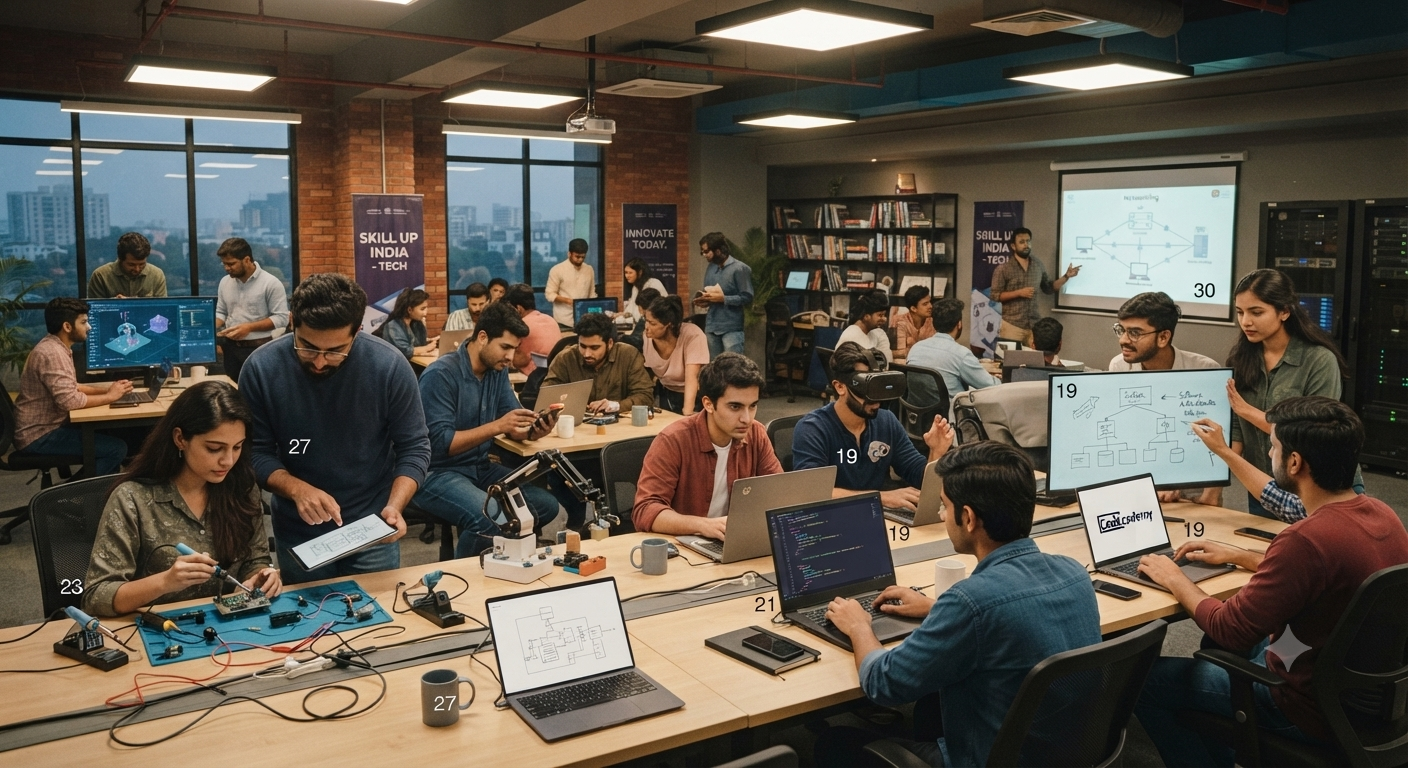
Technology is changing the way people learn, work, communicate and build businesses. From education and healthcare to agriculture, manufacturing, finance and public services, technology has become an important part of everyday life.
However, access to technology alone is not enough.
A person may have access to a smartphone or the internet, but without the knowledge and skills to use technology effectively, the opportunity remains limited. The future therefore requires not only digital access but also continuous skill development.
For students, technology can open access to educational resources far beyond the classroom. Online courses, digital libraries, educational videos, virtual laboratories, programming platforms and professional learning resources can help students explore subjects that may not be available through their local institutions.
But students also need guidance on how to use these resources productively.
Digital literacy should become an important part of education. Students should learn how to search for reliable information, evaluate online sources, use digital tools, protect their personal information and communicate responsibly online.
Beyond basic digital literacy, young people should have opportunities to develop practical technology skills.
Programming, artificial intelligence, data analysis, cybersecurity, electronics, robotics, design, digital marketing, cloud technologies and other emerging fields are creating new opportunities across the economy.
At the same time, technology should not make traditional and practical skills less important.
Skilled workers are essential to the development of every nation. Electricians, mechanics, technicians, construction professionals, healthcare workers, agricultural specialists, machine operators, designers, craftsmen and many other skilled professionals contribute directly to economic growth.
Skill development should therefore include both modern digital capabilities and practical vocational skills.
Another important challenge is the connection between education and employment.
Many young people complete formal education but struggle to understand what skills employers actually require. There can be a gap between academic qualifications and workplace expectations.
This gap can be reduced through stronger career guidance, internships, apprenticeships, industry interaction, practical projects and skill-based training.
Students should not have to wait until they graduate to discover what their chosen industry expects from them.
Exposure to real-world work should begin much earlier.
Entrepreneurship is another area where technology and skills can create opportunities.
A person with a good idea should be able to learn how to develop a product, reach customers, manage finances, use digital platforms and build a sustainable business.
Technology has lowered some of the traditional barriers to starting a business, but knowledge, mentorship and access to networks remain important.
Skill development should therefore not be limited to preparing people for jobs. It should also prepare people to create jobs.
This opportunity should extend beyond major cities.
Students and young people in rural and underserved communities should have access to the same quality of digital learning, career information and skill development resources available in larger cities.
A student's location should not determine the quality of their opportunities.
Libraries, community technology centres, skill-development centres, vocational institutions and affordable internet access can help bridge this gap.
There is also a need for continuous learning.
The skills required today may not be the skills required ten years from now. As industries change, workers will need opportunities to reskill and upskill throughout their careers.
This means skill development should not stop after school, college or the first job.
Learning should become a continuous part of life.
From a student's first exposure to technology to a professional developing new skills, the journey should remain open to learning and improvement.
The goal should be to build a society where people are not simply consumers of technology but capable users, creators, problem-solvers and innovators.
Technology should help people move from information to knowledge, knowledge to skill, and skill to opportunity.
A stronger technology and skill-development ecosystem can create better employment opportunities, encourage entrepreneurship, improve productivity and help communities participate in the modern economy.
The larger objective is not to make every person a technology expert.
It is to ensure that every person has a fair opportunity to learn the skills necessary for their chosen path.
Students should have the tools to learn.
Workers should have opportunities to reskill.
Entrepreneurs should have access to knowledge and technology.
Communities should have access to digital infrastructure.
And young people should be able to look toward the future with confidence rather than uncertainty.
Technology is changing the world.
Skill development determines whether people are prepared to participate in that change.
If we want to build a stronger and more capable nation, investment in technology, education and human skills must move together.
The future will belong not simply to those who have access to technology, but to those who know how to use it, improve it and turn it into meaningful opportunities for themselves and society.