Empowering Women: Building Equal Opportunities from Education to Leadership
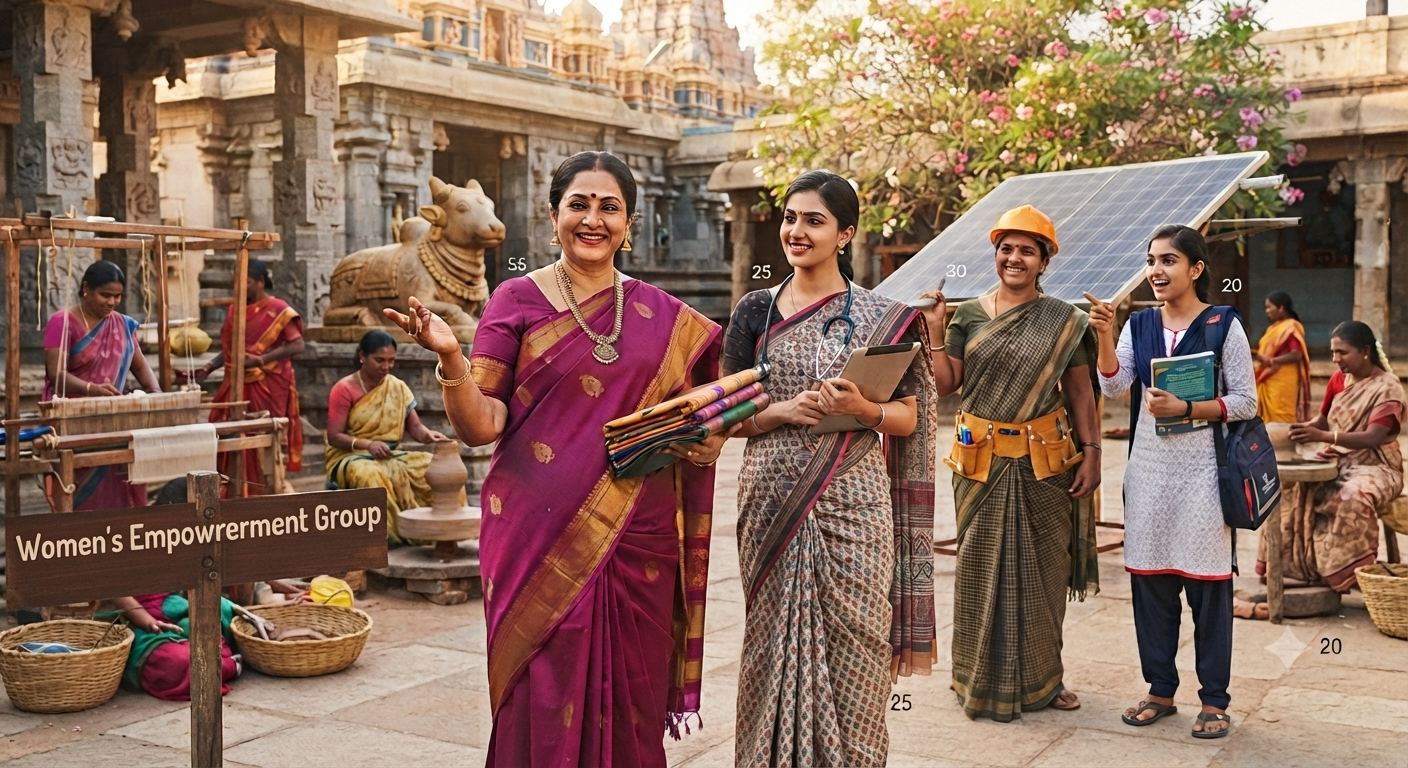
Women's empowerment is not simply about giving women more opportunities. It is about creating an environment where every woman has the freedom, resources, knowledge and confidence to make decisions about her own life and contribute meaningfully to her family, community and nation.
Across society, women contribute in countless ways as students, professionals, entrepreneurs, farmers, educators, caregivers, researchers, public servants, business owners and community leaders. However, many women continue to face barriers that can limit their access to education, employment, financial independence, technology, healthcare, leadership opportunities and decision-making.
True empowerment begins with education.
A girl who receives quality education gains more than academic knowledge. Education can improve her ability to understand opportunities, make informed decisions, develop professional skills and participate confidently in society. Ensuring that girls can continue their education through school, college and higher studies should therefore remain an important social priority.
Digital access has also become an essential part of empowerment. Technology provides access to education, employment opportunities, financial services, entrepreneurship resources, information and communication. However, a digital divide can prevent many women from benefiting from these opportunities.
Providing affordable internet access, digital literacy and access to computers and smartphones can help more women participate in the modern economy and access information independently.
Economic independence is another important part of empowerment.
Women should have opportunities to enter the workforce, build businesses, develop professional skills and control their own financial decisions. Entrepreneurship programmes, vocational training, access to financial services, mentorship and market opportunities can help women turn their abilities into sustainable sources of income.
Employment should also be accompanied by safe and respectful working environments. Women should be able to pursue education, careers and businesses without facing discrimination, harassment or unnecessary barriers.
Empowerment also requires encouraging women to participate in leadership.
Leadership is not limited to politics. Women can lead in schools, universities, businesses, technology, science, healthcare, agriculture, community organisations, local institutions and public administration.
When women participate in decision-making, different experiences and perspectives can become part of the discussion.
Political awareness is particularly important.
Women should have access to clear information about government programmes, public institutions, rights, responsibilities and opportunities available to them. Political awareness can help citizens understand how decisions made by governments and public institutions affect everyday life.
Women should not only be viewed as beneficiaries of development. They should also be recognised as active participants in creating development.
There is also an important role for families and communities.
Empowerment cannot be achieved through government programmes alone. Families can encourage girls to pursue education and careers. Communities can support women entrepreneurs and professionals. Educational institutions can create opportunities for leadership and skill development. Businesses can provide fair employment opportunities and safe workplaces.
Men and boys also have an important role to play. A society that respects equality requires participation and responsibility from everyone.
Safety is another fundamental requirement.
Women should be able to travel, study, work and participate in public life without fear. Improving public infrastructure, transportation, digital safety, awareness and access to support systems can contribute to creating safer environments.
However, empowerment should not be measured only by the number of programmes created. We should also ask whether women can actually access those programmes, whether information reaches the people who need it, and whether opportunities are available beyond major cities.
A woman in a rural community should have the same aspiration and opportunity to learn, build a career or start a business as a woman in a major city.
A young girl should be able to imagine herself as a scientist, engineer, entrepreneur, teacher, athlete, artist, administrator or political leader without believing that certain careers are beyond her reach.
The larger goal should be to create a society where a woman's circumstances do not determine the limits of her ambition.
Empowerment begins with education.
Education creates awareness.
Awareness creates confidence.
Confidence creates participation.
Participation creates opportunity.
And opportunity creates independence.
Building a stronger nation requires the participation of everyone. When women are given meaningful access to education, skills, economic opportunities, technology and leadership, the benefits extend beyond individual women and their families to communities and the wider economy.
Women are not simply part of the nation's future.
Women are an essential part of the nation's present.
Creating equal opportunities for women is therefore not only a question of social justice. It is an investment in the development, strength and future of the entire nation.